


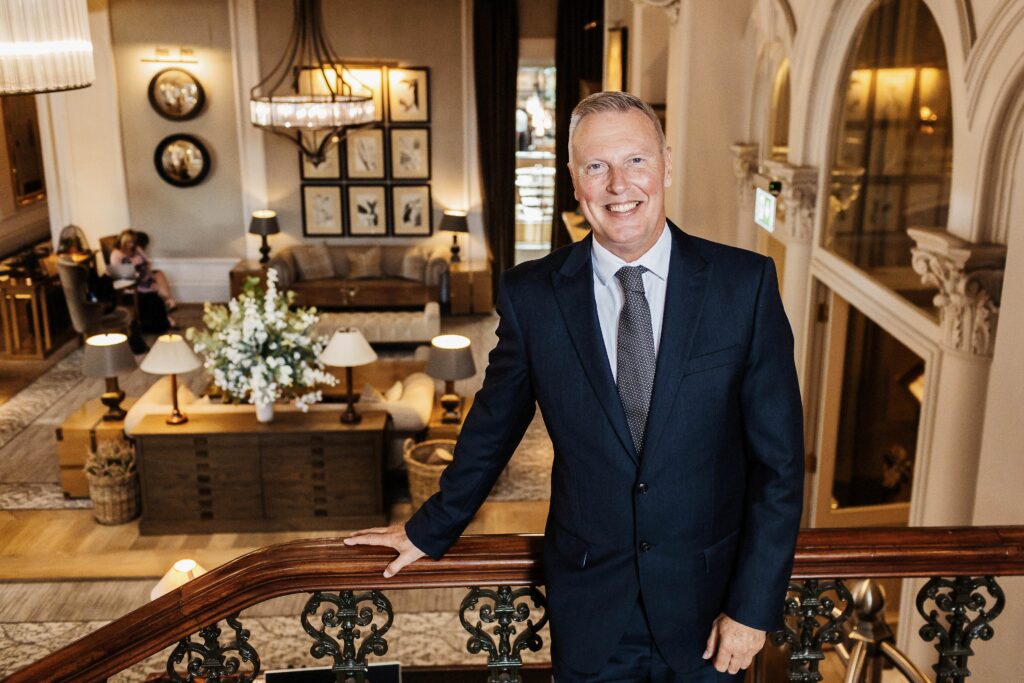
With a hospitality career spanning nearly 30 years, Andy Barnsdale is now general manager of The Milner York, leading one of York’s historic hotel properties as it develops the next chapter in its long relationship with the city and its railway heritage.
Originally opened as the Royal Station Hotel in 1878, the property was designed as an integral part of York’s new station and the flagship hotel of the North Eastern Railway Company. Renamed The Milner York in October 2024, it now commemorates William Milner, the York station foreman who lost his life while retrieving medical supplies during an air raid in the Second World War.
Today, the hotel has 155 rooms and suites, alongside gardens, dining and bar spaces, leisure facilities and meeting and events accommodation. Its railway story is reflected in the building itself, with period architectural features retained across a number of its public and events spaces.
The hotel’s location beside York Station places it at a key gateway to a city that continues to attract visitors for its layered Roman, Viking, medieval and railway history. York Minster, the Shambles, JORVIK Viking Centre and the National Railway Museum form part of a visitor offer that supports leisure breaks, business travel and events throughout the year.
Against this backdrop, Barnsdale discusses leadership, heritage, team culture and the challenge of creating hotel experiences that remain relevant to contemporary guests while retaining a clear connection to place.
Looking back over your career, what are the biggest changes you’ve seen in how hotels operate and connect with guests?
The biggest shift has been from service to experience. Early on, it was about delivering a comfortable stay, now it’s about creating something more memorable. Guests increasingly seek that personalisation, a strong sense of place, and genuine interaction. Of course, technology has helped streamline operations, but I think it’s the human connection that really defines a stay today.
Having led a number of well-known properties throughout your career, what experiences have shaped your approach to leadership the most?
Starting behind the bar gave me a real grounding in how hotels work day to day. Leading openings, refurbishments, and repositioning projects also shaped my approach, as those moments demand clear communication and trust. I’ve always believed in leading from the front and creating an environment where people feel valued and supported.
When considering the role at The Milner York, what appealed to you about the opportunity?
It was the chance to take on a landmark hotel at such a pivotal moment. The transition to The Milner York offered the opportunity to shape its future while respecting its rich heritage. That balance of history and forward thinking was a big draw.
How have you approached the unique challenges that come with a historic hotel?
It’s all about balance. We’ve worked hard to honour the hotel’s heritage and connection to York’s railway history, while investing to ensure it meets modern expectations. Just as important has been bringing the team on that journey, creating a shared vision for what the hotel represents today.
To what extent do today’s guests expect more than just a stay, and how is that influencing the way hotels think about experience?
Guests expect far more than a room. They’re looking for memorable, personalised experiences. That’s pushing hotels to think creatively – from design to service – and to focus on the details that make a stay feel unique and meaningful.
How are you ensuring The Milner York remains both relevant to modern travellers and true to its heritage?
We’ve taken a holistic approach, investing in both the building and the team. Modern upgrades ensure comfort, while the hotel’s story remains central to the experience. Culture is also key – when the team understands and believes in that story, it naturally comes through for guests.
Where are you currently seeing the most change or momentum within the hospitality sector?
I think guests want hotels with a strong identity and local connection. At the same time, sustainability and efficiency are becoming more important, shaping how hotels operate behind the scenes.
In your view, what sets apart a truly effective hospitality team today?
A strong team is built on trust, communication, and a shared sense of pride. When people feel valued and empowered, they deliver better experiences. That culture makes all the difference.
For those starting out in hospitality, what skills or mindsets do you think are most important to succeed long-term?
Be open to learning every part of the business and stay adaptable. Build strong relationships, work hard, and be willing to take opportunities as they come. A genuine passion for helping people is essential.
And finally, what are you most focused on achieving at The Milner York over the next few years?
The focus is on building momentum and establishing The Milner York as one of the city’s most loved hotels. That means continuing to evolve the guest experience, staying true to its heritage, and ensuring the team remains at the heart of everything we do.
To start up a conversation with Andy, connect with him via LinkedIn.

Publisher of Hospitality and Leisure News, 365 Retail, Retail Source and organiser of the Creative Retail Awards.
- Terry Clark
- Terry Clark
- Terry Clark
- Terry Clark
- Terry Clark
- Terry Clark
- Terry Clark
- Terry Clark
- Terry Clark
- Terry Clark
- Terry Clark
- Terry Clark
- Terry Clark
- Terry Clark
- Terry Clark
- Terry Clark
- Terry Clark
- Terry Clark
- Terry Clark
- Terry Clark
- Terry Clark
- Terry Clark
- Terry Clark
- Terry Clark
- Terry Clark
- Terry Clark
- Terry Clark
- Terry Clark
- Terry Clark
- Terry Clark
- Terry Clark
- Terry Clark
- Terry Clark
- Terry Clark
- Terry Clark
- Terry Clark
- Terry Clark
- Terry Clark
- Terry Clark
- Terry Clark
- Terry Clark
- Terry Clark
- Terry Clark
- Terry Clark
- Terry Clark
- Terry Clark
- Terry Clark
- Terry Clark
- Terry Clark
- Terry Clark
- Terry Clark
- Terry Clark
- Terry Clark
- Terry Clark
- Terry Clark
- Terry Clark
- Terry Clark
- Terry Clark
- Terry Clark
- Terry Clark
- Terry Clark
- Terry Clark
- Terry Clark
- Terry Clark
- Terry Clark
- Terry Clark
- Terry Clark
- Terry Clark
- Terry Clark
- Terry Clark
- Terry Clark
- Terry Clark
- Terry Clark
- Terry Clark
- Terry Clark
- Terry Clark
- Terry Clark
- Terry Clark
- Terry Clark
- Terry Clark
- Terry Clark
- Terry Clark
- Terry Clark
- Terry Clark
- Terry Clark
- Terry Clark
- Terry Clark
- Terry Clark
- Terry Clark
- Terry Clark
- Terry Clark
- Terry Clark
- Terry Clark
- Terry Clark
- Terry Clark
- Terry Clark
- Terry Clark
- Terry Clark
- Terry Clark
- Terry Clark
- Terry Clark
- Terry Clark
- Terry Clark