Salford’s Grade II-listed Buile Hill Mansion has reopened after a council-led restoration, with SpaceInvader delivering a hospitality-led interiors scheme across its public and events spaces.
Salford’s Buile Hill Mansion has reopened as a hospitality and civic venue following an £11m transformation led by Salford City Council.
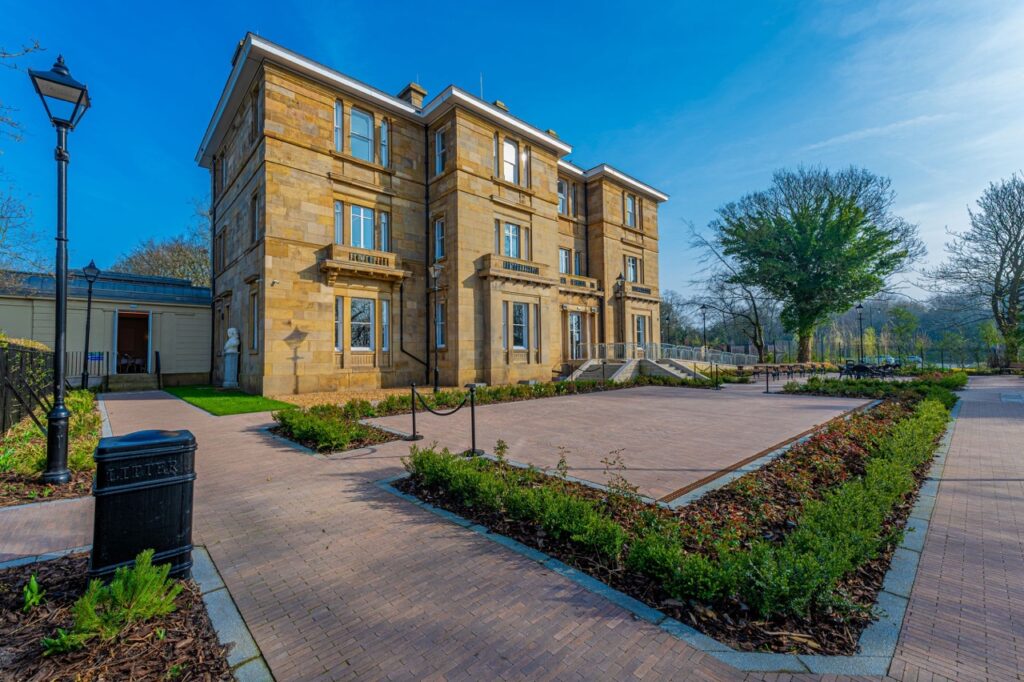
The Grade II-listed building, set within Buile Hill Park, had been derelict for 25 years before the restoration project brought it back into use. The renovated Buile Hill Mansion now accommodates Salford City Council’s register office, a café, bar, community spaces, wedding rooms and hireable function areas.
Buttress Architects was appointed to oversee the architectural restoration, including work to bring the building in line with contemporary regulations. Manchester-based design consultancy SpaceInvader was commissioned to develop the interiors, wayfinding and signage for a series of public-facing and flexible events spaces.
Advertisement
“Giving what had become a tired local asset such a major transformation has been a real joy for the SpaceInvader and wider project teams. Buile Hill Mansion is now a place for community and celebration; a venue people will use and visit for generations to come, tying the past, present and future together in the communal memory.”
John Williams, Founder/Director of SpaceInvader
Restoring A Grade II-Listed Salford Landmark
The 976 sq m, three-storey building was completed in 1827 as the family home of Sir Thomas Potter, a local textile merchant who became Manchester’s first elected mayor. It was designed by Sir Charles Barry, later known for work including Manchester Art Gallery, the Houses of Parliament and Trafalgar Square.
The mansion later passed out of family use and became a mining museum before closing and transferring into the ownership of Salford City Council.
The restored building now includes Salford City Council’s registry services and offices, alongside community spaces including a café and community group room. It also contains a hireable bar, wedding rooms and function space. SpaceInvader worked with the council to devise new names for each room.
As part of Buttress Architects’ remit, disabled access ramps, a lift and an external enclosed staircase were introduced. The staircase provides a secondary fire escape and supports the building’s return to viable public use. Former depot outbuildings, except for the derelict greenhouse, were demolished, with a new car park and landscaping also created.
Hospitality And Civic Uses
Visitors enter through the north-facing main entrance into a reception space. From there, they are directed either to the relocated register office on the second floor, accessed by the central staircase or lift, or towards the function rooms, café and terrace.
The Secret Garden Café, a public-facing space for park users and destination visitors, is located on the ground floor alongside washrooms and access to a landscaped external area. A bar area adjoins the café via bi-folding doors and forms part of the function room offer.
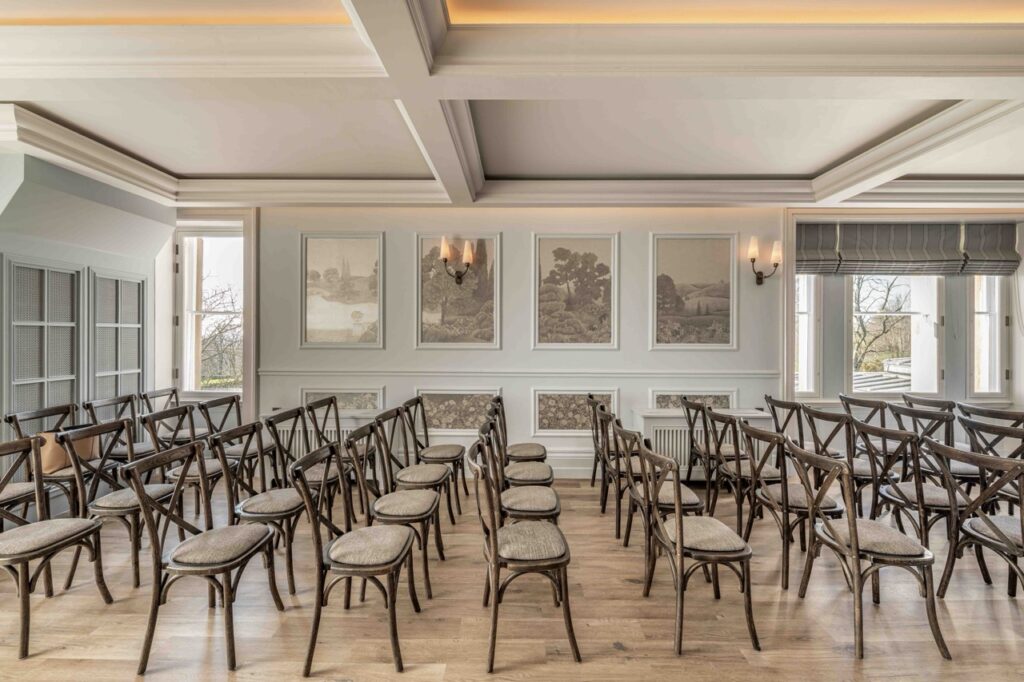
The first floor contains the principal events and wedding ceremony spaces, collectively named The Kingslea Suite. The suite includes a circulation area leading into the ceremony room, with capacity for up to 80 people in each area. The Olive Room provides a bridal statutory or pre-ceremony space with loose furniture and a vanity table, and can also be used for small legal ceremonies.
Design Concept
The wider design concept draws on three strands: old keys found in the derelict building, the reported association between Frances Hodgson Burnett and Buile Hill Park, and the mansion’s Georgian architecture. The idea of “unlocking the secret garden” informed both the signage language and the café name.
“When we first visited the site” Imogen Woodage, Associate Director at SpaceInvader explained, “the property was in a very dilapidated state. Amongst various items from the past still lying around were a lot of old keys. This discovery went on to form a first strand of inspiration for the interiors scheme, with keys becoming an icon for the signage language, for example. Frances Hodgson Burnett, the author of the classic children’s novel ‘The Secret Garden’, was also rumoured to have written the book during one of her many visits to the park – and this became a further part of the design concept: unlocking the secret garden, with the book name also inspiring the name of the café.”
Imogen Woodage, Associate Director at SpaceInvader
The Georgian colour palette includes soft pastels in mauve and green, alongside black and white tiles, mosaic details and heritage-inspired flooring. The project also references the surrounding parkland and the Sensory Garden, originally created in 1963 as a garden for the blind and replanted as part of the wider landscaping works.
Interior Treatment
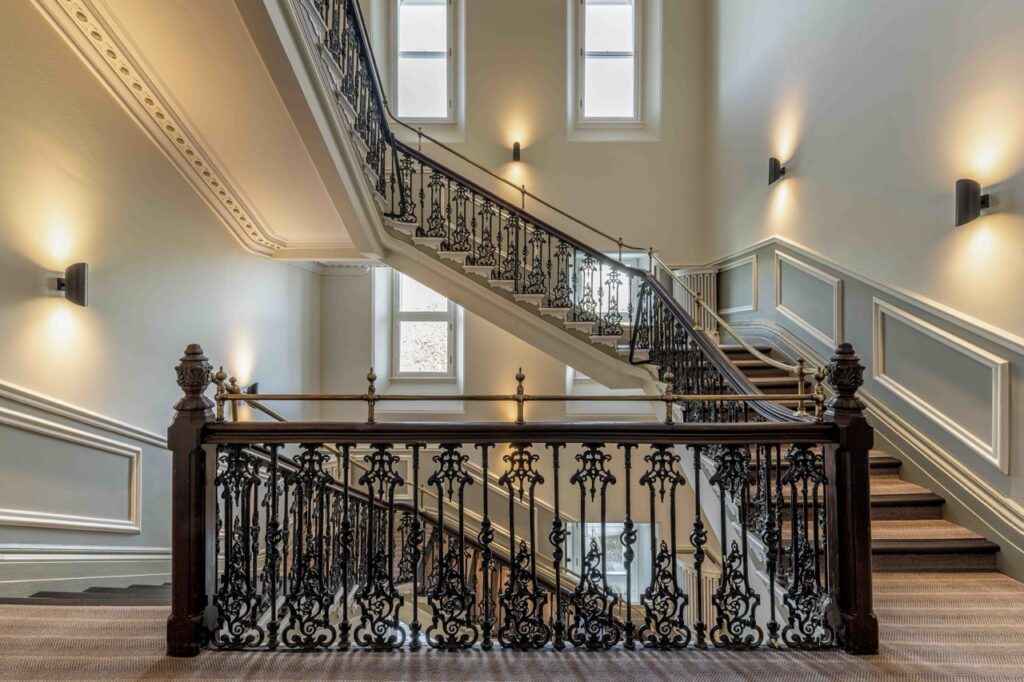
In the reception area, existing floor tiles discovered during renovation were restored and used to frame new monochrome marble-effect floor tiles by Solus Ceramics. The original staircase balustrade and handrail were retained and restored, with a new chevron-pattern stair runner by Calderdale. SpaceInvader also proposed a new chandelier arrangement to replace the drama of a missing historic pendulum, using six pendants at varying lengths from Northern Lights.
The bar and café have been designed for day-to-night use. The bar has a richer palette, including walnut laminate, antique mirroring and LED lighting, while The Secret Garden Café uses muted green tones to reflect the surrounding park. Together, the bar and café provide 45 covers.
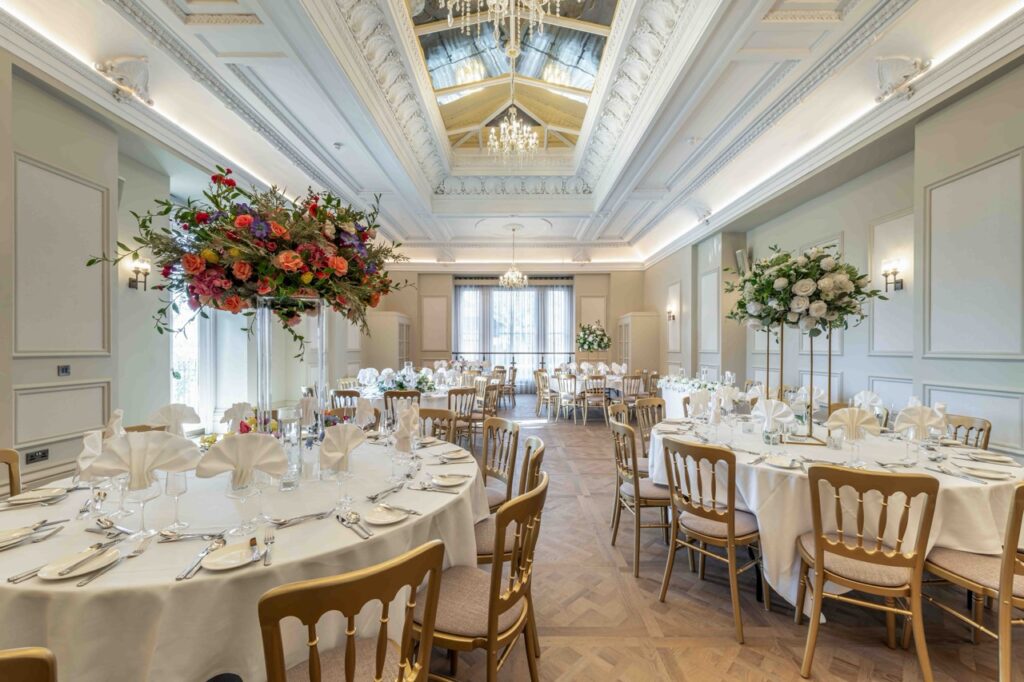
The Potter Suite, on the ground floor, was the only function room where original ceiling cornicing could be restored. SpaceInvader designed mirror-effect glazed cladding for the central lantern ceiling feature, with bespoke chandeliers by Northern Lights. The room uses a neutral palette intended to allow weddings and floral arrangements to take visual focus.
On the first floor, the interiors take a more contemporary approach. The Olive Room uses sage green tones, wall mouldings, centralised wall lights and a papered ceiling with a mural-effect tree shadow. The Kingslea Suite uses a pastel blue palette, wall mouldings and botanical wallpaper from Cole & Son set into individual artwork-style sections.
The renovated Buile Hill Mansion now combines civic, community and private hire functions within the restored Grade II-listed building.
Receive sector news and insights by subscribing to the FREE 365 Retail newsletter via this link.
Entries are open for the Creative Retail Awards, featuring more than 20 categories across retail, hospitality, and leisure design, with an entry deadline of 1 May. Submit entries via this link.