
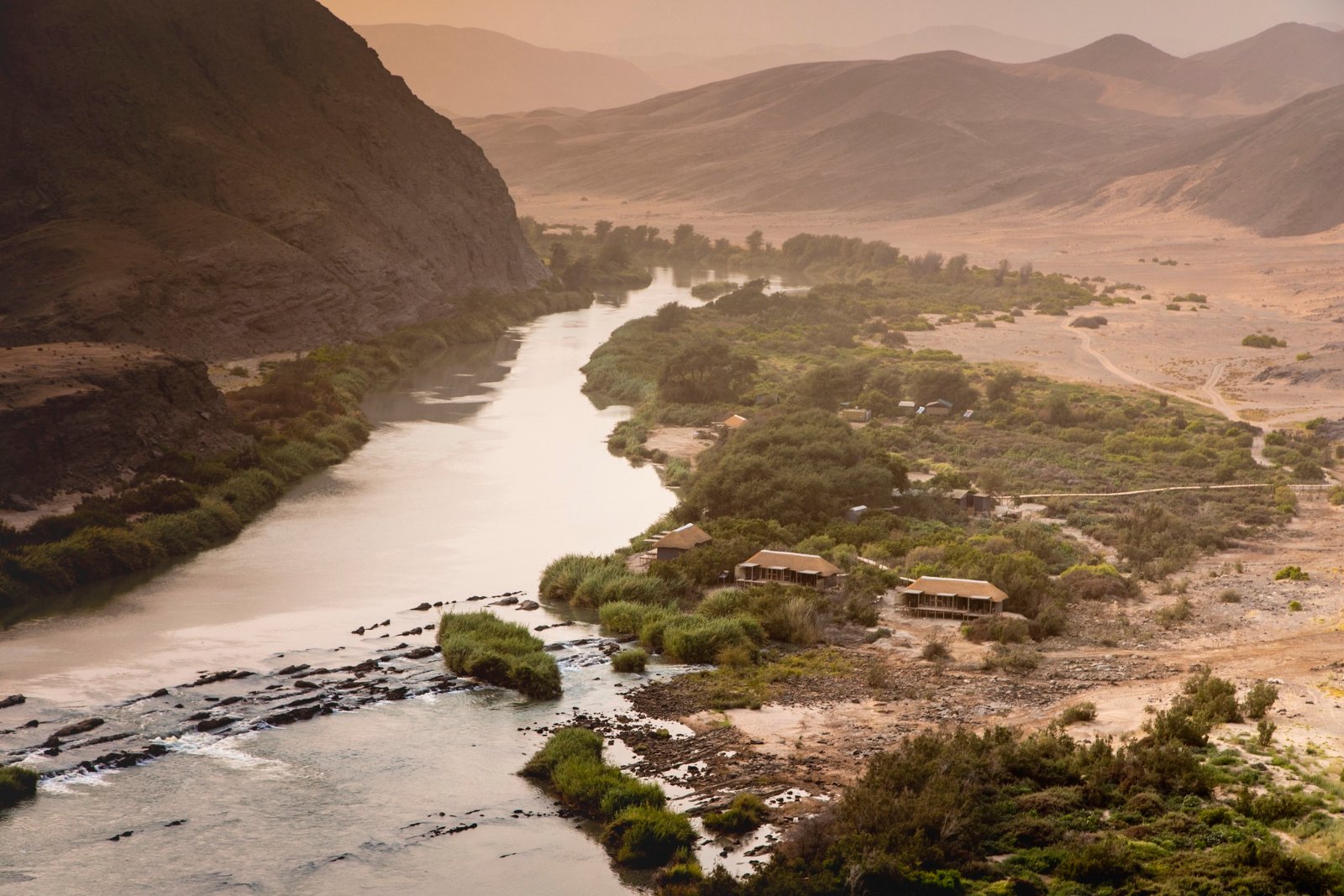
Wilderness Serra Cafema, one of Africa’s most remote safari camps, will reopen on 1 December following a rebuild after a fire earlier this year. Set on the banks of the Kunene River where it forms Namibia’s border with Angola, the camp returns with four rebuilt suites, a redesigned main area and the Kunene Retreat, its first dedicated wellness space.
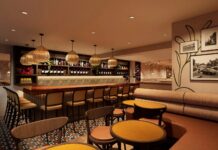
Rather than reinvent the camp, the rebuild was designed to keep its spirit and sense of place while making more of the riverside setting. The new main area is a single long structure built to maximise frontage onto the river, with the boat ramp set off-centre so nothing interrupts the view. Built from wood, canvas, glass and aluminium, it has interiors by Artichoke that take their colours from the river, mountains and dunes. Where the original camp was pared back, the new space is warmer and more layered, with hanging lights, a lounge lined with books and a central island bar, flanked by the restaurant on one side and two lounges on the other, separated by a large two-way fireplace. The fire circle remains at the centre of the main deck.
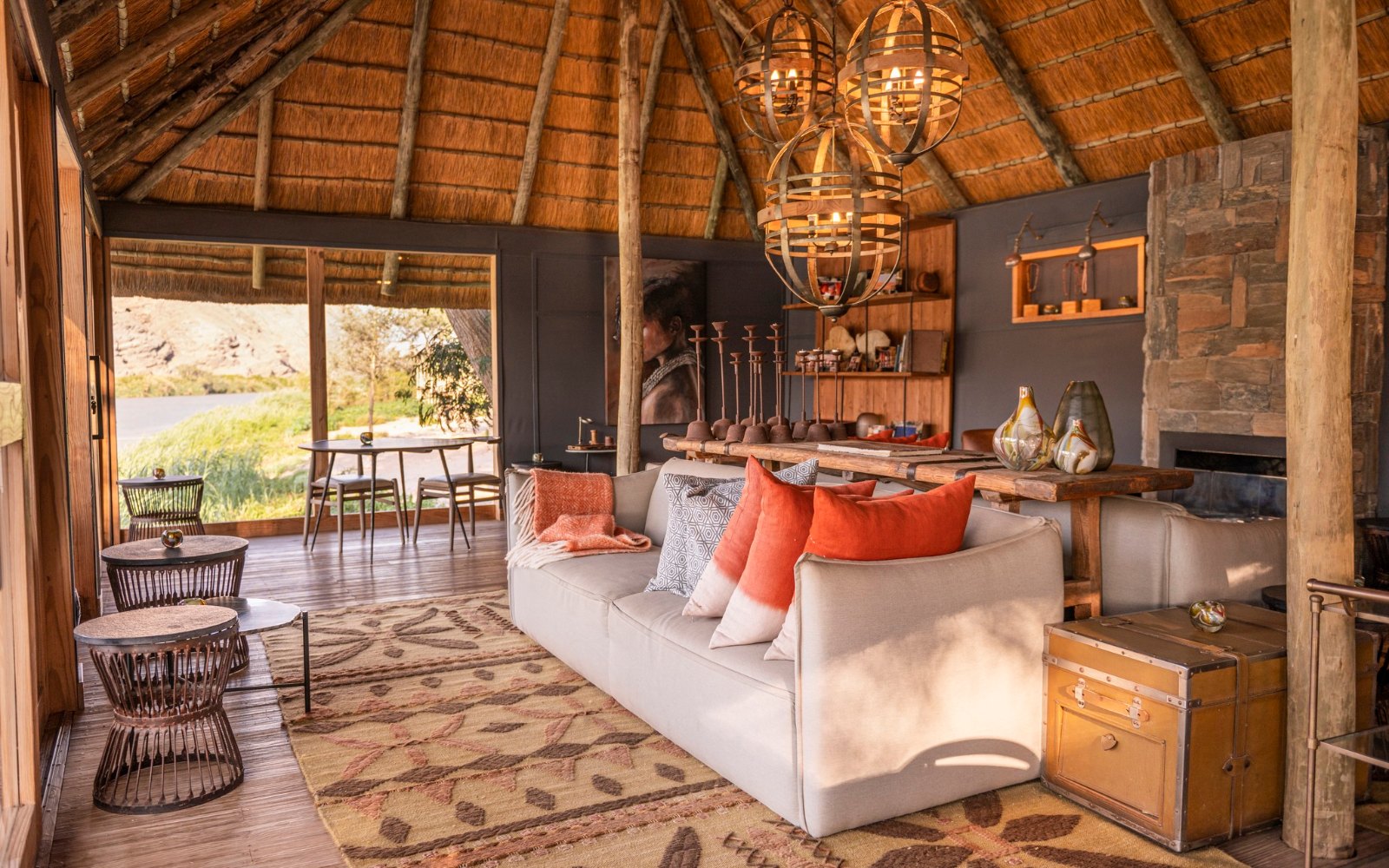
The palette also draws on the Himba, one of Namibia’s last semi-nomadic peoples, who number roughly 50,000 across northern Namibia and Angola. Himba women are known for otjize, a mix of crushed red ochre and fat used to cleanse, moisturise and beautify the skin, and its ochre tones are echoed throughout the camp.
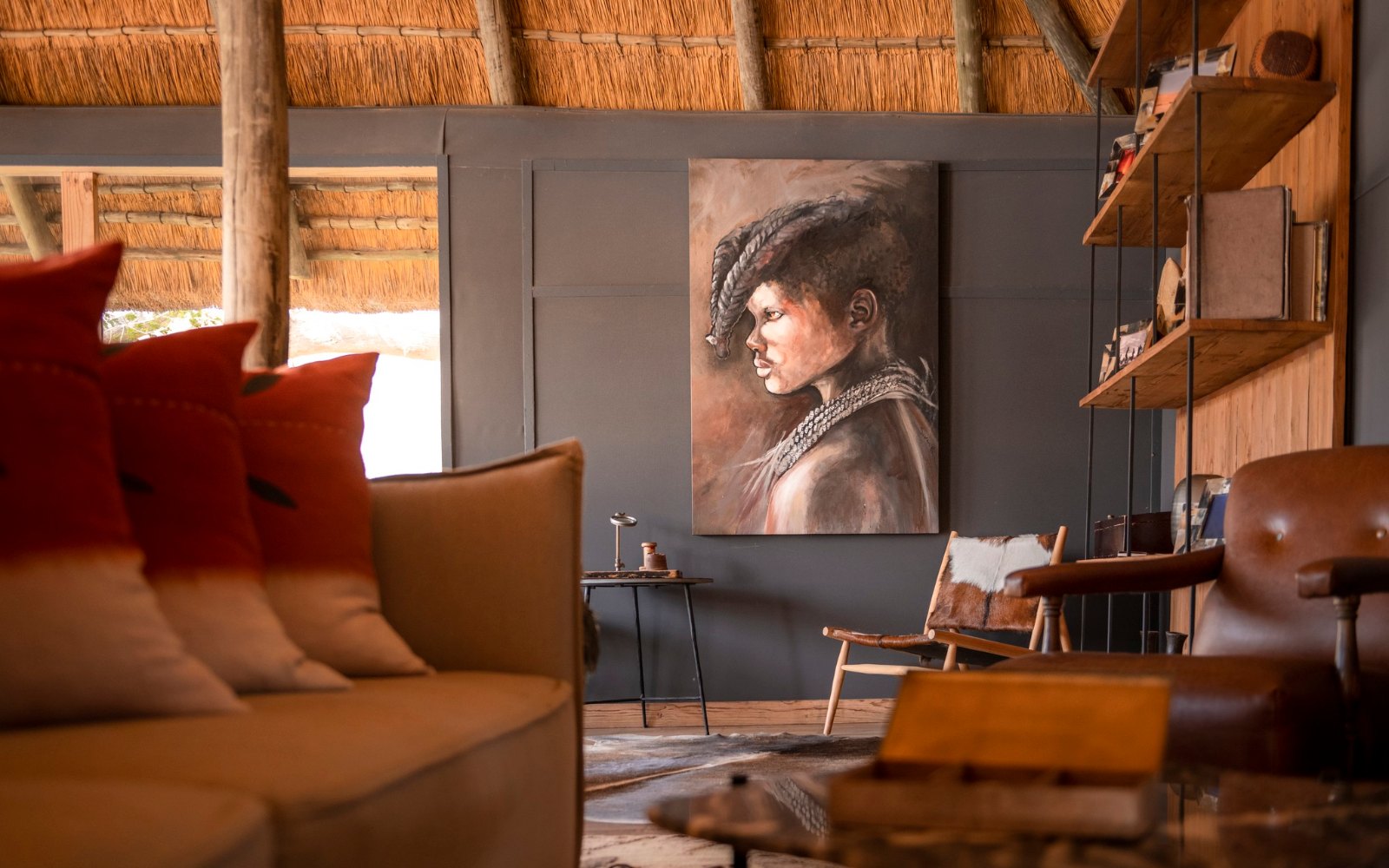
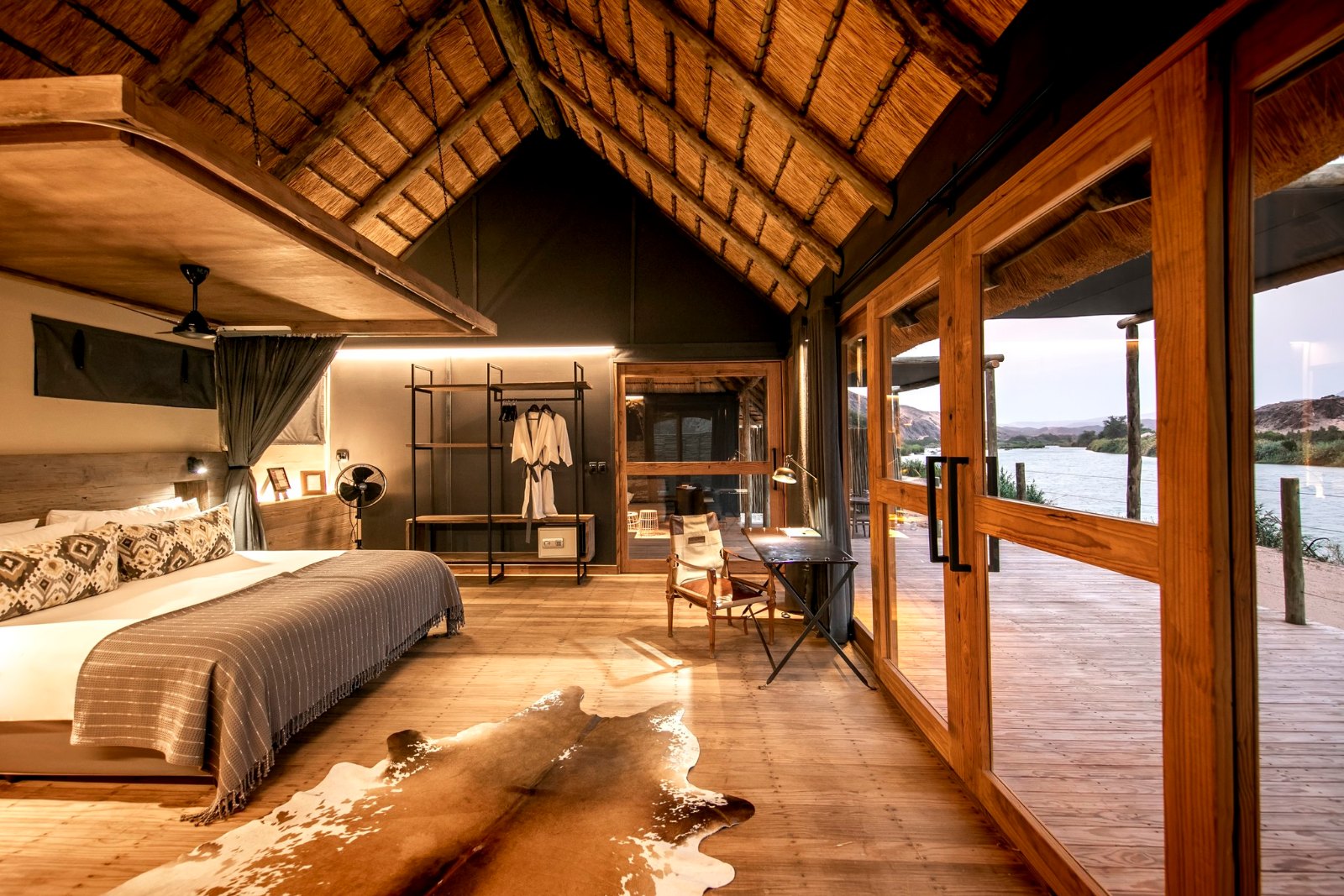
Of the camp’s eight suites, seven twins and one family suite, four have been rebuilt along their original lines but with slightly larger bathrooms. Each rebuilt suite opens onto a small private deck, with a larger main deck in front of an outdoor sala, where oversized Himba- and Kunene-inspired portraits hang alongside a minibar and coffee station. In the four original suites, the minibar and coffee station will also move out to the sala, and all eight suites will have air conditioning.
The Kunene Retreat is built around four ideas: recovery, movement, treatment and quiet reflection. It has two treatment rooms, a sauna, a gym and two hot and cold plunge pools known as Ami Pods, and uses shade, privacy and orientation to make the landscape part of the experience, with the Himba colour palette tying it to the rest of the camp.
‘Serra Cafema has always been a place that asks you to slow down and pay attention,’
Alex Henderson, Managing Director, Wilderness Namibia
‘The fire was a difficult moment, but it gave us the chance to rebuild with care, keeping everything our guests and our Himba partners love about the camp, and adding the Kunene Retreat as a space to absorb this remarkable landscape a little more deeply.’
The camp depends on the river, the only permanent source of water in this corner of the Namib. Flowing from the Angolan highlands to the Atlantic, it carries a ribbon of reeds and ana trees through a stark landscape of mountains, dunes and gravel plains. Nile crocodiles bask on its banks and kingfishers, herons and bee-eaters live in the riverine vegetation, while beyond the river desert-adapted oryx, springbok and Hartmann’s mountain zebra survive on very little, alongside desert chameleons and endemic lizards.
Activities include nature drives across the desert plains and mountain valleys, guided walks to look for tracks, plants and reptiles, the camp’s dune-sensitive quad biking and, when water levels permit, boating on the Kunene. Guests can also visit a neighbouring Himba village with a translator, although as families move seasonally with their herds, visits depend on the community being nearby.
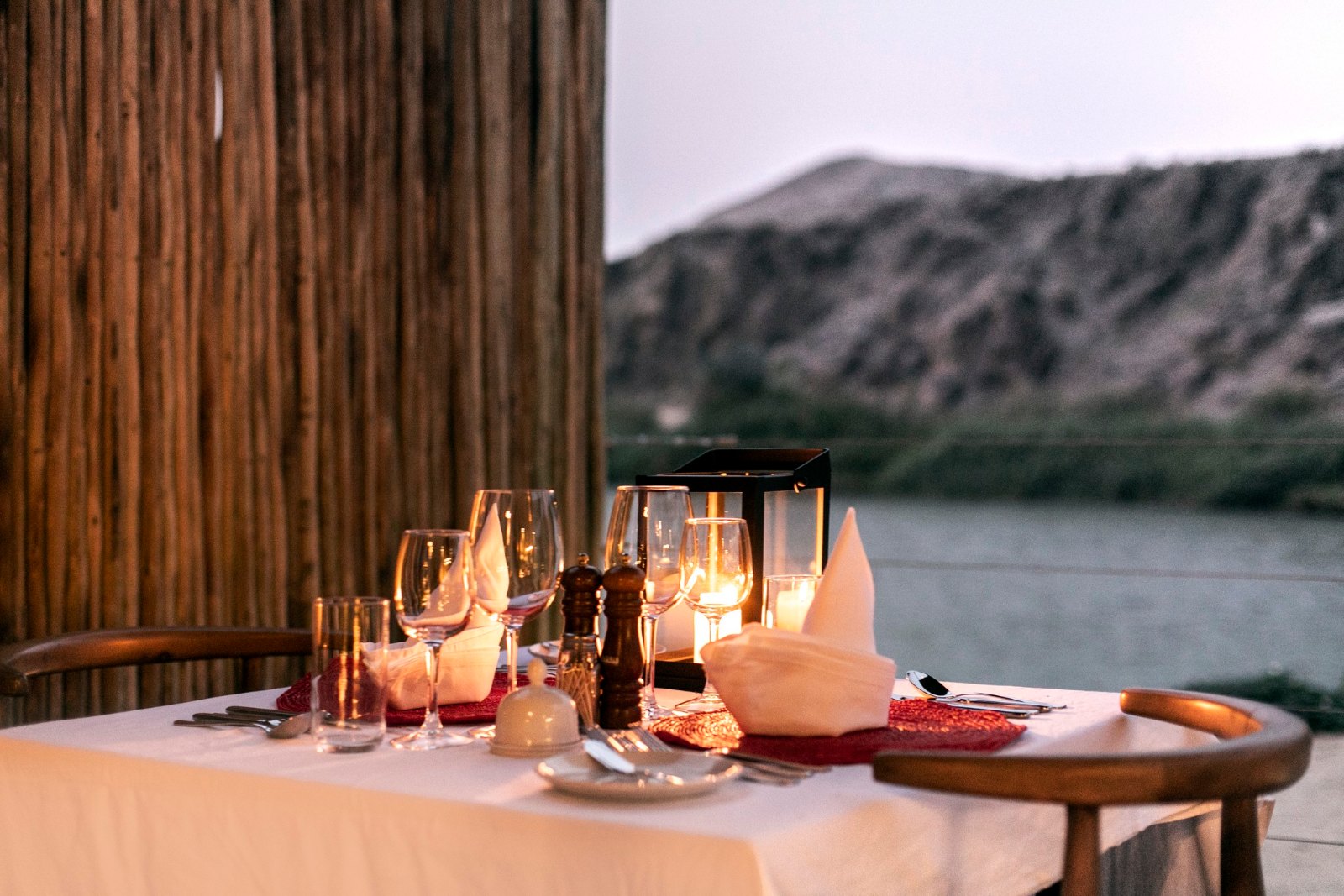
Serra Cafema lies within the 291,500-hectare Marienfluss Conservancy, which stretches from the Hartmann’s Mountains to the Kunene River. Wilderness has partnered with the conservancy since 2003, leasing the camp from it, and around 70% of the camp’s staff are Himba. Its support includes skills development, Children in the Wilderness programmes, a mobile medical clinic serving the village of Otjinungua and, most recently, a solar-powered pumping system that draws water from the Kunene for nearby communities, so families no longer have to collect it from the crocodile-inhabited riverbanks.
‘What hasn’t changed is what matters most,’
Alex Henderson, Managing Director, Wilderness Namibia
‘Every stay at Serra Cafema helps protect one of Southern Africa’s last truly remote desert river wildernesses, and the culture that is so closely tied to it. We look forward to welcoming guests back to the camp, both those who have known it for years and those discovering this remarkable corner of Namibia for the first time.’
Wilderness Serra Cafema reopens to guests on 1 December. Wilderness, founded more than 40 years ago, operates more than 55 camps and lodges across Botswana, Kenya, Namibia, Rwanda, South Africa, Tanzania, Zambia and Zimbabwe.

Publisher of Hospitality and Leisure News, 365 Retail, Retail Source and organiser of the Creative Retail Awards.