
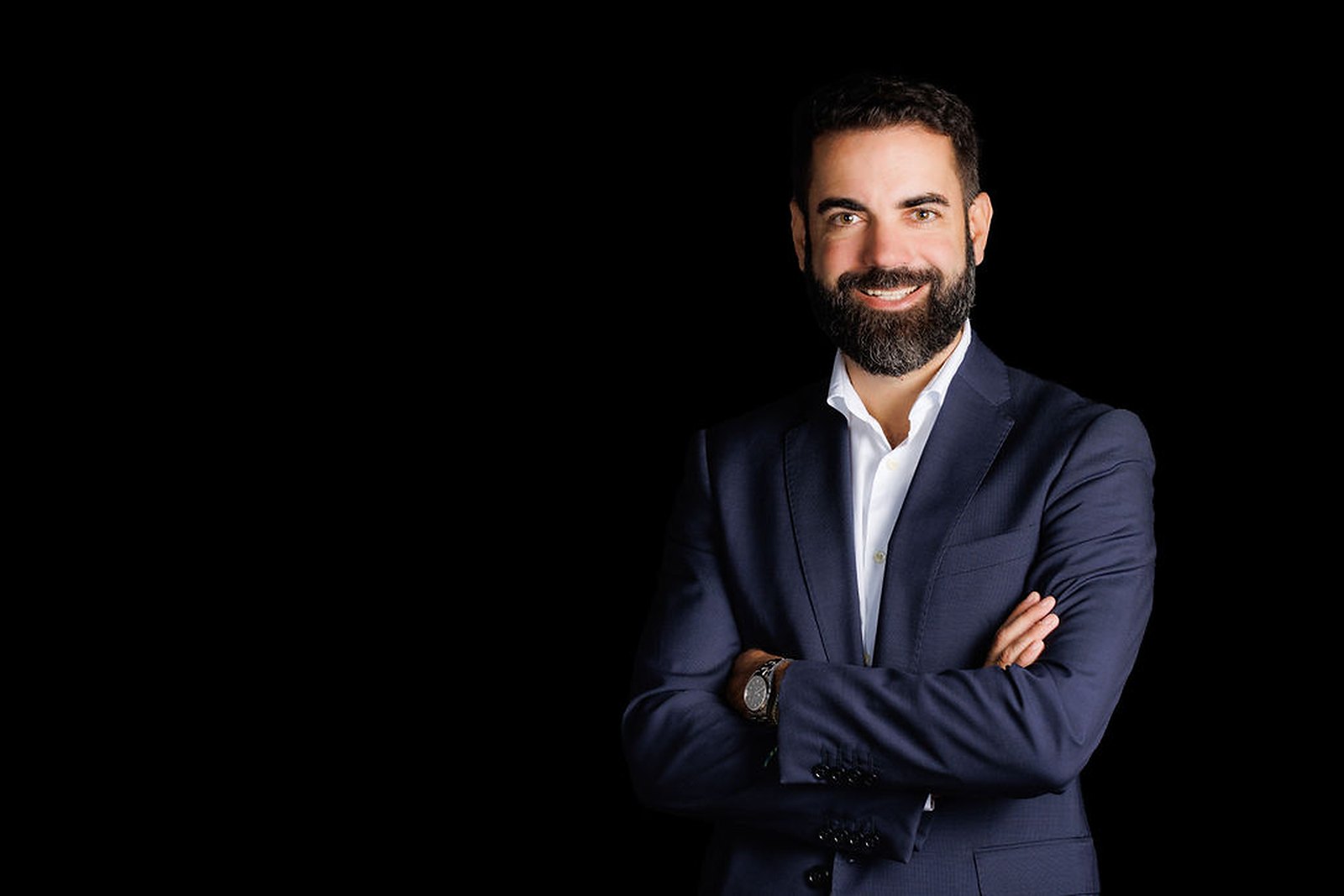
Bernat Vicens is chief executive of FERGUS Group, the Mallorca-based company founded in 2011 by entrepreneur Pep Cañellas to reposition and run hotels along the Spanish coast. Alongside its FERGUS Hotels portfolio and Affiliated by FERGUS, the group runs tent Hotels, a brand built for travellers who see the hotel as a base rather than the main event.
Launched in 2020, tent Hotels takes existing hotels in resorts such as Magaluf, El Arenal, Lloret de Mar and Torremolinos and refurbishes them with efficient, comfortable rooms and lively communal spaces. Reception becomes a Desk & Bar, and much of the stay can be handled from a phone, from self check-in and mobile room access to local recommendations in the tent App.
Its signature is B&UB, or Bed & Unlimited Brunch, which swaps a fixed breakfast for a brunch served until 13:30 that guests can return to as often as they like, while tentlivery brings food from local restaurants to the hotel for the rest of the day. The brand operates in Mallorca, Málaga and the Costa Brava, and its next hotel, tent Eolo in Puerto Pollença, is due to open in spring 2027.
FERGUS Group reached 40 hotels this month with the addition of FERGUS Bamboo Alcudia in the north of Mallorca. Here, Vicens talks about the thinking behind tent Hotels, how it balances digital convenience with human hospitality, why it transforms existing hotels rather than building new ones, and what guests can expect at tent Eolo.
FERGUS Group has positioned tent Hotels around the idea that modern travellers see hotels as a base rather than the main event. How has that philosophy influenced everything from design and operations to guest services and staffing?
FERGUS Group identified a new market niche with today’s traveller: a profile that no longer wants to spend most of their time inside the hotel, but instead values having a comfortable, flexible and well-connected base from which to discover the destination more freely. That vision is what gave rise to the tent Hotels concept.
We are pioneers in a business model based on the B&UB concept (Bed & Unlimited Brunch), which reinforces the freedom and flexibility that define the brand. This approach transforms the traditional breakfast offering into an extended brunch experience available until 13:30, allowing guests to enjoy a more relaxed and unhurried way of starting their day.
Our hotels are also completely refurbished to introduce an update design and spaces adapted to a guest who is far more autonomous and experience-driven than in traditional hospitality models. Rooms are intentionally efficient and comfortable, while communal areas play a much more central role in the experience.
Operationally, we have embraced digitalisation to remove friction from the guest journey, allowing travellers to manage much of their stay independently through tools such as self check-in, mobile room access and the tent App. At the same time, hospitality remains essential. Technology is there to simplify processes, but our teams are focused on creating genuine human connection and helping guests engage more deeply with the local destination. For example, the reception has evolved into a Desk & Bar — combining guest support and social interaction in a single flexible space — reflecting a more fluid and contemporary approach to hospitality. Thus, guests at tent now check in through self-service kiosks and we’re evolving it to a check-in completely through their own mobile phone.
This philosophy also shapes our staffing model. We prioritise adaptable, multi-skilled teams with strong local knowledge who can operate in a more transversal and dynamic way than in traditional hotel structures. Ultimately, tent Hotels is designed around how people genuinely travel today — more independently, more digitally and more connected to experiences outside the hotel itself.
tent Hotels’ B&UB concept challenges the traditional hotel food-and-beverage model. What inspired the decision to prioritise flexibility over conventional breakfast schedules, and how has guest response shaped the evolution of the offering?
The Bed & Unlimited Brunch (B&UB) concept was born from observing how travel habits have evolved. Today’s traveller increasingly values flexibility and does not want their holiday experience to revolve around rigid schedules, particularly in leisure destinations where freedom and spontaneity are central to the experience.
At tent Hotels, we wanted to completely rethink the traditional food and beverage model. Rather than offering the conventional breakfast, lunch and dinner structure, we chose to focus on one broad and highly flexible Unlimited Brunch concept available until 13:30.
Guests can enjoy brunch whenever they want throughout the morning and return as many times as they like, allowing them to organise their day entirely around their own rhythm rather than fixed hotel schedules.
For the rest of the day, the concept is intentionally designed to encourage freedom and connection with the destination. Guests can choose to explore the local gastronomy outside the hotel or use services such as tentlivery, our delivery solution that allows them to order food directly from carefully selected local restaurants and enjoy it comfortably within the hotel environment.
The result is a much more flexible and experience-led approach to hospitality that better reflects how people travel today — whether that means exercising early, working remotely, exploring locally or simply starting the day later.
The response from guests has been extremely positive because the concept solves a genuine traveller need while becoming one of the brand’s strongest differentiators. Flexibility consistently ranks among the most valued aspects of the guest experience, particularly among international travellers and more experience-driven travel profiles.
Guest feedback has also helped us continue refining the concept over time, from expanding healthier options to further developing the social and relaxed atmosphere around the brunch experience.
Importantly, B&UB is not only beneficial from a guest perspective. Operationally, it also supports greater efficiency and helps reduce unnecessary food waste by adapting more naturally to actual guest behaviour and consumption patterns.
The tent concept is clearly geared towards a more independent, digitally savvy traveller. How do you balance self-service convenience with creating a sense of hospitality and human connection?
For us, technology should enhance hospitality rather than replace it. Today’s travellers expect convenience, autonomy and seamless digital experiences, but they also fundamentally value knowing there is always someone available who understands both the hotel and the destination whenever they need support.
Operationally, we have embraced digitalisation to remove friction from the guest journey. Guests can manage much of their stay independently through self check-in, mobile room access and digital guest services, while we are continuing to evolve towards a much more integrated mobile-first experience.
Our objective is to centralise the entire digital guest journey within the guest’s own mobile device — from pre check-in and room access to WiFi connection, communication, recommendations and access to hotel services — creating a seamless and highly intuitive experience without unnecessary steps or multiple platforms.
Beyond improving convenience for guests and reducing operational pressure on reception teams, this integrated approach also allows us to better understand guest behaviour during the stay and create far more personalised communication and post-stay experiences.
Ultimately, the value is not simply in introducing new digital features, but in moving from multiple disconnected systems towards a single integrated hospitality ecosystem that creates a much smoother and more intuitive guest experience.
At the same time, automation gives our teams more time to focus on meaningful guest interaction rather than administrative processes. The role of the team evolves towards that of destination ambassadors and experience facilitators, helping guests discover the local culture, gastronomy and experiences in a more authentic and personalised way.
What opportunities do you see in transforming existing hotels into lifestyle-led concepts like tent Hotels, rather than building from scratch?
The tent Hotels model was built precisely around the regeneration and repositioning of existing hotel assets, particularly in mature leisure destinations where tourism infrastructure already exists but needs to evolve alongside changing traveller expectations.
In fact, the rapid growth of tent Hotels itself demonstrates the strength of this approach. In just six years, the brand has grown to eleven operating hotels because it provides a real and scalable solution for transforming existing hotel stock into concepts that are more aligned with how people travel today.
At tent Hotels, we completely transform existing properties to create a fully integrated concept adapted to today’s traveller, while avoiding the environmental impact associated with new construction. It is a more agile, responsible and sustainable way of growing.
Beyond the operational advantages, this approach also contributes to the wider regeneration of destinations. By modernising outdated hotel stock and introducing concepts that attract more experience-driven travellers, we help destinations diversify their tourism offering and evolve towards more balanced and higher-value tourism models.
This strategy has been particularly relevant in destinations such as Magaluf, El Arenal, Lloret de Mar and Torremolinos, where repositioning existing assets contributes to changing the perception of the destination itself and attracting a broader and more diverse traveller profile.
For us, regeneration is not only about minimising environmental impact. It is about actively contributing to the evolution of mature leisure destinations through the transformation of existing hotels into concepts that are more aligned with the future of travel.
With nine fully refurbished properties already operating across Spain, what insights have you gained about how younger travellers’ expectations are changing, particularly around flexibility, social spaces and value?
What we have observed is not necessarily a shift linked to age, but rather to attitude and travel behaviour. Today’s traveller — regardless of generation — increasingly values independence, flexibility and experiences that feel more authentic and connected to the destination.
With the experience gained across our nine refurbished properties in Spain, we have identified a very clear evolution in what guests expect from hospitality. Flexibility has become a basic expectation. Travellers want to manage their experience autonomously and adapt each part of their stay to their own rhythm.
That mindset directly influences how we design both services and spaces, from dining concepts and digital tools to the structure of communal areas.
We have also seen a growing importance placed on shared spaces, which are no longer viewed as secondary hotel areas but as genuine social and lifestyle hubs where leisure, work and interaction coexist naturally. Guests increasingly value vibrant, multi-purpose environments where they can relax, work remotely, socialise and connect with other travellers.
At the same time, they are seeking experiences that feel more authentic and rooted in the local destination. They no longer perceive the hotel as a closed environment, but rather as a starting point for discovering local culture, gastronomy and experiences in a more genuine way. That is one of the reasons initiatives such as tentlivery or destination recommendations through the tent App resonate so strongly with guests.
Perceptions of value have also evolved considerably. Today, value is not defined exclusively by price, but by relevance, atmosphere, flexibility and connection to the destination.
What made Puerto Pollença the right fit for the next evolution of the tent concept with the opening of tent Eolo next spring, and what can guests expect from this particular property?
Puerto Pollença was a very natural choice for the next evolution of the tent concept because it combines a well-established destination with a more balanced tourism model focused on nature, outdoor activities and the Mediterranean lifestyle. It is a location that reinforces the idea of the hotel as a starting point for discovering the destination at a slower and more authentic pace.
It also represents an important opportunity to continue moving towards less seasonal tourism models, with a greater continuity of activity and more stable demand throughout the year. Compared to destinations such as Magaluf or Playa de Palma, Puerto Pollenca already benefits from a naturally longer season thanks to segments such as cycling tourism and outdoor recreation, which attract visitors during the low and shoulder seasons. Hotels in the area typically operate from late February or early March through to mid-November, allowing for a significantly extended operating period.
tent Eolo will represent a natural evolution of the concept while remaining true to its core philosophy of flexibility, digitalisation and autonomy. Guests can expect contemporary and highly functional design, vibrant social spaces, a seamless digital experience and, of course, the B&UB concept that has become synonymous with tent Hotels.
The property will be deeply rooted in its surroundings, reflecting the outdoor culture, local atmosphere and Mediterranean rhythm that define Puerto Pollença. Rather than being just a place to stay, tent Eolo will act as a base from which guests can fully experience the destination — its nature, its lifestyle and its authenticity — in a more open and connected way.
What do you believe differentiates tent Hotels from other affordable lifestyle or hybrid hospitality concepts currently emerging across Europe?
What differentiates tent Hotels is that the concept was specifically designed for beach destinations undergoing transformation, in response to structural changes in traveller behaviour and tourism demand
While more autonomous hospitality concepts and brunch-led models are becoming more common in urban hospitality, bringing this approach into traditional beach holiday destinations has been genuinely disruptive.
tent Hotels has challenged the conventional resort hotel model by proving that a more flexible and operationally simplified concept can remain highly competitive while responding to a growing segment of travellers seeking greater freedom and independence.
Many of these travellers were increasingly turning towards holiday rentals — including unregulated accommodation — because traditional hotel formats were not adapting quickly enough to changing expectations. This creates not only inconsistencies in quality, safety and service standards for guests, but also wider challenges for local communities and destinations.
Our model offers an alternative that combines the flexibility and autonomy travellers increasingly seek with the standards, safety, operational consistency and guest experience of a professionally managed hotel.
Looking ahead, how do you see the tent Hotels concept evolving over the next five years, both in terms of guest experience and geographic expansion?
Over the next five years, we see tent Hotels continuing to evolve as a flexible and scalable hospitality model designed around the future of leisure travel.
From a guest experience perspective, we will continue strengthening the balance between digital convenience and authentic hospitality, while also expanding experiences that connect travellers more deeply with the destination and local community. We also see significant opportunity in further developing hybrid and communal spaces that support leisure, social interaction and remote working simultaneously.
Operationally, innovation and efficiency will remain central, particularly through digitalisation, automation and smarter resource management. Sustainability will continue to play a key role, especially through the regeneration of existing hotel assets rather than large-scale new developments.
In terms of expansion, we see strong potential across leisure destinations in Southern Europe where travellers are increasingly seeking more relaxed, experience-led and value-conscious hospitality concepts. However, growth will remain strategic and selective. Our ambition is not simply to scale quickly, but to ensure each property feels authentic to its location while remaining consistent with the tent philosophy.
Ultimately, we believe tent Hotels represents a future-facing hospitality model — one that combines operational efficiency, guest flexibility and destination regeneration in a way that is increasingly relevant for the future of leisure travel.
More Q&As
All interviews Q&AOllie ShurvilleCo-founder, TentBox
 Q&AJack HurleyCommercial Director, Luxury Lodges
 Q&AAndy BarnsdaleGeneral Manager, The Milner York“Of course, technology has helped streamline operations, but I think it’s the human connection that really defines a stay today.”
Want to be interviewed? Put yourself forward

Publisher of Hospitality and Leisure News, 365 Retail, Retail Source and organiser of the Creative Retail Awards.